
Why the Future of Marketing Is Still Deeply Human Even in th...
April 2026
Jessica Rodgers
Why the Future of Marketing Is Still Deeply Human Even in the Age of AI
At SXSW this year, one idea kept resurfacing: AI is transforming how we create, but not how we connect.
For all its power, AI is not solving the hardest problem in marketing: to earn attention in more meaningful ways. If anything, content is easier to make than ever before, and as a result, harder than ever to cut through. However, when everything becomes easier to produce, what matters becomes much simpler and much more human.
Defining what AI cannot do
One of the most useful ways to understand this comes from Meow Wolf’s Vince Kadlubek, who has suggested that we are asking the wrong question about AI. Instead of focusing on what it can do, we should be asking what it cannot, because whatever remains distinctly human will become the most valuable territory.
So, what can AI do? AI can optimise and generate with extraordinary efficiency. Automation speeds up processes and makes outcomes smoother.
But AI cannot replicate human creativity, genuine surprise, cultural instinct, shared experience or emotional depth, and these are exactly the areas where audience expectations are growing.
Research from Wunderman Thompson Intelligence’s Age of Re-enchantment study highlights just how strong demand for creativity truly is. Nearly two-thirds of people say they want brands to wow them with spectacular marketing, while a similar proportion are actively looking for experiences that make them feel something intense.
Where attention is being won
The question is no longer how to produce more content, but how to create moments that people choose to engage with. This is where out of home and experiential work has the advantage. Not because it is louder than other avenues, but because it is more tangible. It creates shared, real-world moments that people encounter unexpectedly and remember more vividly.
The most effective executions today generate physical engagement, social amplification, earned media and cultural conversation simultaneously. They do not just reach audiences. They involve them.
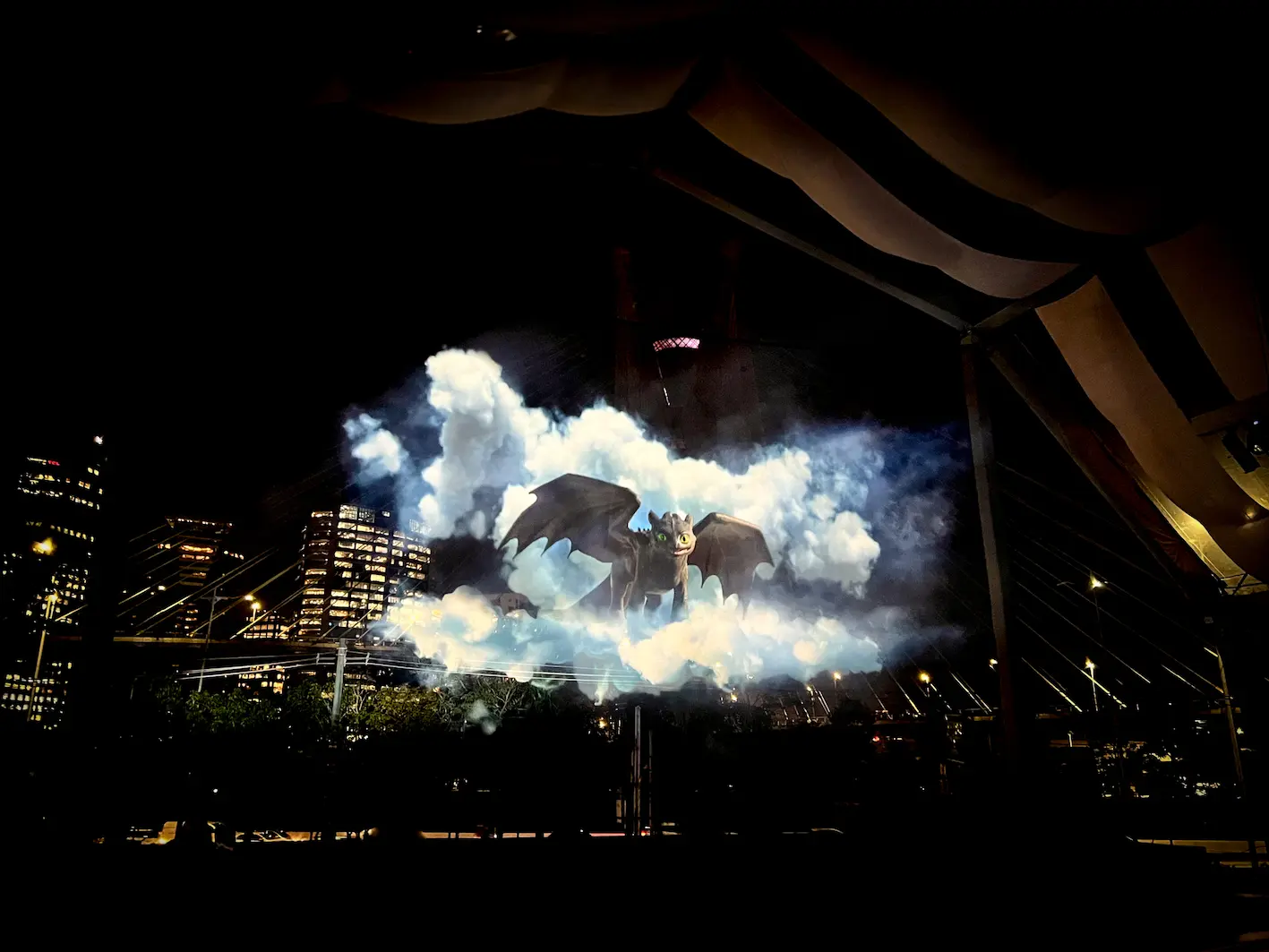
A powerful example of this in action is DOOH.com’s work around the How to Train Your Dragon premiere in Brazil for Universal Pictures International. The installation remained invisible until the exact moment it needed to be seen, revealing Toothless as if he were attending his own premiere.
The reaction was immediate and genuine. It was not just visually impressive, but emotionally engaging, prompting spontaneous responses from those present, including visibly stunned celebrities such as Gerard Butler.
It was not simply content placed in the world. It was a moment that people experienced, reacted to and shared.
Importantly, however, impactful moments do not all need to be large-scale spectacles. Further research from the Age of Re-enchantment study shows that 45% of people prefer brands that surprise and delight. This surprise and delight can happen in different ways. It might be a dynamic message that changes based on time of day, catching someone on their walk home with something contextually relevant. It might be a 3D execution that makes people stop, look twice and engage. Or it might be a full-scale immersive takeover that becomes a cultural talking point.
What matters and intrigues the consumer most is not automation, but human creativity.
A more human future for marketing
What emerges from all of this is not a rejection of AI, but a clearer understanding of its role.
AI will continue to make production faster, cheaper and more scalable. It will play a critical role in enabling smarter, more adaptive campaigns. But it will not replace the need for ideas that resonate on a human level.
If anything, it raises the bar, because in a world where content is infinite, attention is earned through meaning.
The opportunity ahead is not just to use AI more effectively, but to pair it with stronger creative judgement. To use intelligence to enhance relevance, while focusing creative energy on the things that technology cannot replicate.

